Monitor Trends in Hospitality Design: Student Opportunities at the American University in Dubai, UAE
How the American University in Dubai Connects Academia with Industry
The gap between theoretical classroom knowledge and practical industry application remains a significant challenge in higher education. The American University in Dubai addresses this issue directly by integrating live industry projects into its curriculum. Through its Interior Design Department and the specialized AUDesign_lab, the university creates structured environments where students engage with real companies, real constraints, and real deadlines. This approach ensures that graduates possess not only foundational design knowledge but also a clear understanding of how the commercial sector operates.
By prioritizing these applied learning models, the American University in Dubai provides student opportunities that extend far beyond traditional lectures. Students learn to navigate client feedback, adhere to specific brand guidelines, and present their ideas to panels of working professionals. For prospective students evaluating design programs in the region, examining the type of industry partnerships a university maintains is a reliable indicator of the quality and relevance of the education provided. Schedule a free consultation to learn more about how these applied learning models work in practice.
Understanding the SOCIO–Urban Nomads Design Challenge
A prime example of this educational strategy is the recent collaboration between the American University in Dubai and The Lux Collective. The two organizations co-developed the SOCIO–Urban Nomads Design Challenge 2026. This initiative tasked 41 students across 17 teams from the School of Architecture, Art and Design with developing innovative, guest-centric lobby concepts for a new hospitality brand.
The challenge was embedded directly into the IDES 374 – Hospitality Design course, guided by Professor Annamaria Lambri, Chair and Associate Professor of the Interior Design Program. Rather than designing for a hypothetical scenario, students worked with the actual parameters of The Lux Collective’s newest brand, SOCIO. This direct engagement requires students to research the brand’s target demographic, understand its market positioning, and translate those business requirements into physical spatial solutions.
The Vision Behind the SOCIO Brand
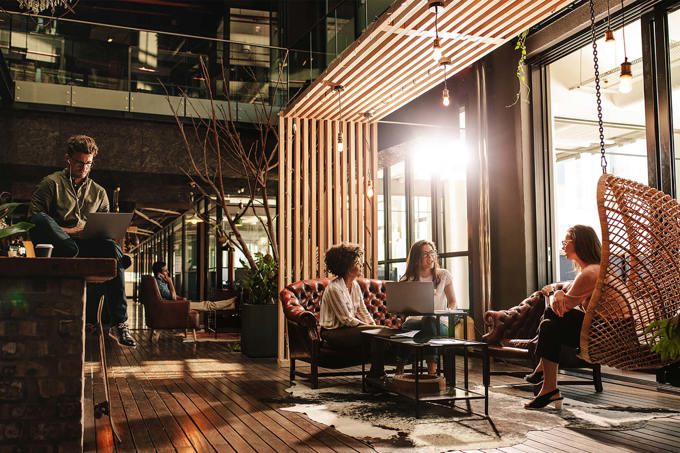
To create effective hospitality design, students must first understand the operational philosophy of the brand. The SOCIO concept is built around the modern “social nomad”—a demographic that includes professionals, digital nomads, and culture-shapers who require more than just a place to sleep. The brand functions as a purpose-driven social hub that integrates co-working spaces, wellness experiences, and social interaction zones.
For the student teams, this meant designing flexible and immersive environments. A lobby in a traditional hotel serves as a transitional space, but for SOCIO, the lobby acts as the central nucleus of the guest experience. It must accommodate focused work, casual networking, and relaxation simultaneously. Students had to consider acoustics, furniture ergonomics, lighting schemes, and spatial flow to ensure these varied activities could coexist without conflict.
Integrating Real-World Briefs into the Curriculum
The integration of this challenge into the academic semester ensures that the work is treated with the same rigor as a professional commission. Students progressed through standard design phases: research, conceptualization, spatial planning, material selection, and final presentation. The top 10 finalist teams were required to present their concepts during a Virtual Grand Finale and Awards Ceremony to a distinguished panel from The Lux Collective, simulating a high-stakes client pitch.
This process teaches students how to articulate their design decisions. It is not enough to create a visually appealing space; students must explain how their design solves the specific problems outlined in the brief and how it serves the intended user base. Explore our related articles for further reading on how project-based learning accelerates skill acquisition.
Key Learning Outcomes for Interior Design Students
Participating in high-level competitions yields specific educational outcomes that standard assignments often fail to achieve. For the students involved in the SOCIO challenge, several core competencies were put to the test and subsequently refined.
- Cultural Storytelling: The winning project, “NADWA by SOCIO,” developed by students Ahmed Al-Bayati, Maya Kharboutly, and Zena Nimer, succeeded because it incorporated culturally inspired storytelling. In the UAE, hospitality design must often balance global modernism with local cultural nuances. Learning to weave narrative elements into spatial design is a highly sought-after skill.
- Social Connectivity: Designing for connection requires an understanding of human behavior in shared spaces. Students learned how to position furniture, create sightlines, and define zones that encourage interaction without forcing it.
- Brand Alignment: Translating a corporate brand identity into a three-dimensional physical space is a complex task. Students gained firsthand experience in ensuring that every material choice, color palette, and lighting fixture aligned with The Lux Collective’s vision for the SOCIO brand.
- Professional Presentation: Pitching to a panel of industry executives requires a different skill set than presenting to a professor. Students learned to manage their time, highlight the most impactful aspects of their designs, and answer unscripted questions from seasoned professionals.
Why Industry Partnerships Matter for UAE Student Opportunities
The UAE has established itself as a global hub for tourism, luxury, and innovative hospitality. As the sector continues to grow and evolve, the demand for specialized interior designers who understand the nuances of this market increases. Industry professionals and prospective students must monitor how educational institutions respond to these shifts. Universities that maintain strong ties to local and international hospitality brands provide a distinct advantage to their student body.
Partnerships like the one between the American University in Dubai and The Lux Collective serve as a critical bridge. As Paul Mulcahy, Chief Commercial Officer at The Lux Collective, noted during the event, engaging with a new generation of designers allows the industry to tap into fresh perspectives and bold thinking. Conversely, as Professor Annamaria Lambri highlighted, these partnerships demonstrate how design can shape new ways of living and connecting for global nomads, providing students with a platform to test their future-oriented ideas.
For students studying in the UAE, these collaborations offer direct networking opportunities. The judges, mentors, and brand representatives involved in these challenges are often the very people making hiring decisions at major hospitality firms. Performing well in a visible, branded challenge acts as a highly effective portfolio piece and a direct line to employment. Submit your application today to position yourself within a network that actively connects students with industry leaders.
Building a Career in Hospitality Design
Entering the field of hospitality design requires more than an eye for aesthetics. It demands a comprehensive understanding of operations, building codes, material durability, and user psychology. Programs that require students to complete industry briefs—like the IDES 374 course at the American University in Dubai—ensure that graduates are ready to contribute to a design firm from their first day on the job.
Skills Employers Seek in Modern Design Graduates
When evaluating candidates for junior interior design roles, hospitality firms look for a specific set of competencies that are difficult to develop solely through textbook study:
- Adaptability: The ability to revise designs quickly based on client feedback or structural constraints.
- Technical Proficiency: Mastery of industry-standard software for 3D modeling, rendering, and drafting.
- Material Knowledge: Understanding which materials are suitable for high-traffic commercial environments, considering factors like maintenance, acoustics, and fire safety ratings.
- Interdisciplinary Thinking: The capacity to integrate lighting design, technology infrastructure, and structural elements into a cohesive aesthetic.
By participating in challenges that focus on modern concepts like co-working integration and wellness spaces, students at the American University in Dubai demonstrate precisely these skills. They prove they can think beyond the traditional hotel room and lobby paradigm to address the evolving needs of contemporary travelers.
Next Steps for Prospective Design Students
Choosing a university is a major decision that directly impacts your career trajectory. Prospective students should look closely at the type of projects current students are completing and the companies the university partners with. The SOCIO–Urban Nomads Design Challenge is a clear indicator that the American University in Dubai prioritizes relevant, challenging, and highly visible academic experiences.
If you are planning to pursue a degree in interior design or architecture, consider what kind of portfolio you want to build over the next four years. Do you want to work on hypothetical exercises, or do you want to design for actual brands, receiving feedback from active industry executives? The difference between these two paths is significant when it comes time to enter the job market.
The American University in Dubai continues to expand its student opportunities through initiatives like AUDesign_lab, reinforcing its position as a central institution for design education in the UAE. By fostering environments where academia and industry intersect, the university prepares its graduates to lead the next wave of hospitality design. Have questions? Write to us! to learn more about the Interior Design program and how you can get involved in future industry challenges.