
How the American University in Dubai Supports the Abu Dhabi Biobank and Healthcare Innovation in the UAE
The Role of Academic Institutions in the Abu Dhabi Biobank Initiative
The healthcare landscape in the UAE is rapidly evolving, moving toward systems that rely on comprehensive data to drive clinical decisions. At the center of this shift is the Abu Dhabi Biobank, a national initiative designed to collect, store, and analyze biological samples alongside detailed health information. The American University in Dubai (AUD) has taken a proactive role in this initiative, demonstrating how academic institutions can directly contribute to national healthcare priorities. By participating in the biobank’s launch, AUD is helping to bridge the gap between theoretical scientific research and practical, clinical applications that benefit the broader population.
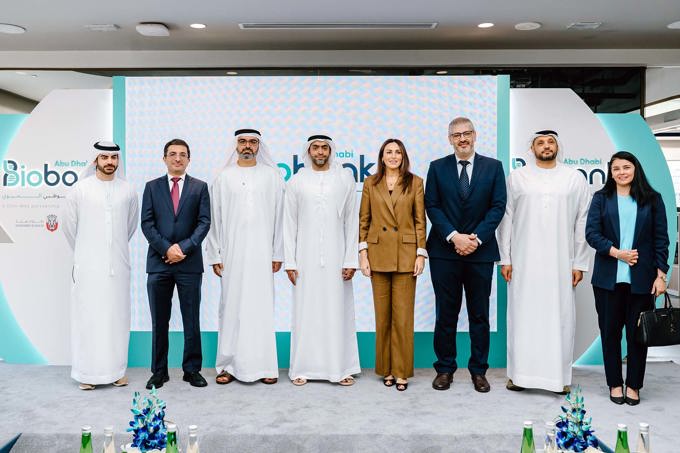
Academic involvement is critical to the success of large-scale biobanking projects. Universities provide the foundational research frameworks, the specialized personnel, and the rigorous ethical oversight required to manage complex biological data. AUD’s presence at the launch event, represented by Dr. Muriel Tahtouh Zaatar, Chair of the Department of Biological and Physical Sciences, highlights the university’s commitment to aligning its academic research capabilities with the strategic goals of the UAE’s health sector. For prospective researchers and students, this involvement signifies an educational environment deeply connected to current industry developments.
Schedule a free consultation to learn more about AUD’s research programs.
Understanding the Abu Dhabi Biobank and Precision Medicine
To appreciate the significance of this initiative, it is necessary to understand what a biobank does and how it supports precision medicine. Traditional medical treatments often follow a one-size-fits-all approach, but precision medicine aims to tailor prevention and treatment strategies to individual characteristics, including genetics, environment, and lifestyle. The Abu Dhabi Biobank facilitates this by securely housing high-quality biological samples—such as blood and tissue—linked to comprehensive health data.
When researchers and clinicians monitor population health through a biobank, they can identify patterns that would be invisible in smaller, isolated studies. For example, by analyzing genetic markers across thousands of samples, scientists can pinpoint specific risk factors for chronic diseases prevalent in the region, such as diabetes or cardiovascular conditions. This capability allows the healthcare system to move from a reactive model—treating patients after they become ill—to a proactive model that emphasizes early detection, risk prediction, and targeted interventions before clinical symptoms appear.
Integrating Data Across Clinical Practice and Research
A recurring theme during the Abu Dhabi Biobank launch was the necessity of connecting data across various domains. Generating vast amounts of biological data is only useful if that data can be seamlessly integrated into decision-making frameworks. The biobank is designed to function as a central platform that connects healthcare providers, researchers, and academic institutions. This connectivity is essential for reducing the fragmentation that often plagues medical research.
In practice, this means a clinician treating a patient in Abu Dhabi can benefit from insights derived from the biobank, while an academic researcher at AUD can access anonymized data to study disease progression. This closed loop—from the patient to the lab and back to the clinic—accelerates the pace of medical discovery and ensures that research translates into tangible improvements in patient care. The ability to continuously monitor health outcomes based on this integrated data is what ultimately drives healthcare innovation forward.
American University in Dubai: Advancing Biological and Physical Sciences
The American University in Dubai has consistently invested in its scientific curriculum to prepare students for careers in emerging medical and research fields. The university’s Department of Biological and Physical Sciences offers a robust Bachelor of Science in Biology, as well as a Pre-Medical Studies track designed for students intending to pursue medical or health-related professional degrees. These programs are grounded in rigorous scientific inquiry and supported by dedicated laboratory facilities.
AUD’s participation in the Abu Dhabi Biobank is a direct extension of its academic mission. Students and faculty in the biological sciences are exposed to the complexities of data-driven research, learning how large datasets are managed, analyzed, and applied in real-world settings. Involvement in national initiatives provides students with a clearer understanding of career trajectories in genomics, bioinformatics, and clinical research. It also reinforces the importance of interdisciplinary collaboration, as biobanking requires expertise not only in biology but also in data science, ethics, and information technology.
Submit your application today to join AUD’s biological sciences programs.
Strategic Collaborations Shaping the UAE Healthcare Ecosystem
The development of the Abu Dhabi Biobank is led across the M42 ecosystem in partnership with the Department of Health – Abu Dhabi (DoH). The launch event featured prominent national leaders, including His Excellency Mansoor Al Mansoori, Chairman of the DoH, and Her Excellency Dr. Noura Al Ghaithi, Undersecretary of the DoH. The presence of these officials underscored the strategic national importance of the initiative and the government’s commitment to positioning the UAE as a global leader in healthcare innovation.
During the event, Dr. Zaatar engaged directly with His Excellency Mansoor Al Mansoori to discuss AUD’s ongoing research initiatives. This exchange highlights the collaborative dynamic required to advance disease-focused research in the UAE. It is not sufficient for academic institutions to operate in silos; they must actively engage with government health authorities and private sector healthcare providers. These strategic partnerships enable the sharing of resources, align research agendas with public health needs, and ensure that academic outputs contribute meaningfully to the national healthcare infrastructure.
Have questions about AUD’s research partnerships? Write to us!
Future Prospects for Healthcare Innovation and Research
The launch of the Abu Dhabi Biobank marks a pivotal milestone in the ongoing development of the UAE’s research ecosystem. For the American University in Dubai, this represents an opportunity to expand its research portfolio and contribute to long-term projects that will shape medical practices for years to come. As the biobank grows, it will generate increasingly complex datasets that will require sophisticated analytical tools and skilled researchers to interpret.
This evolving landscape creates significant implications for the future workforce. There will be a growing demand for professionals who understand both the biological underpinnings of disease and the computational methods used to analyze large-scale health data. Universities that integrate these concepts into their curricula will provide a distinct advantage to their graduates. By maintaining an active role in initiatives like the Abu Dhabi Biobank, AUD ensures its academic programs remain relevant to the needs of the regional and global healthcare sectors.
Furthermore, the focus on precision medicine and proactive care aligns with broader sustainability goals. By improving disease risk prediction and enabling earlier interventions, the healthcare system can allocate resources more efficiently, reduce the long-term burden of chronic diseases, and improve the overall quality of life for the population. Academic institutions play a foundational role in generating the evidence base required to support these systemic improvements.
Explore our related articles for further reading on healthcare education.
Conclusion
The American University in Dubai’s involvement in the Abu Dhabi Biobank launch reflects a deliberate strategy to integrate academic research with national healthcare objectives. By supporting data-driven, patient-centered approaches, AUD is contributing to a broader shift toward precision medicine in the UAE. The initiative demonstrates the value of connecting academic institutions with government health departments and clinical providers to create a cohesive research ecosystem. For students and professionals looking to engage with cutting-edge healthcare innovation, AUD provides an academic environment connected to the forefront of regional medical research and development.