Understand the Standards for Creative Teaching: American University in Dubai M.Ed. Candidate Wins Khalifa Educational Award in the UAE
Why the Khalifa Educational Award Sets the Benchmark for Educators in the UAE
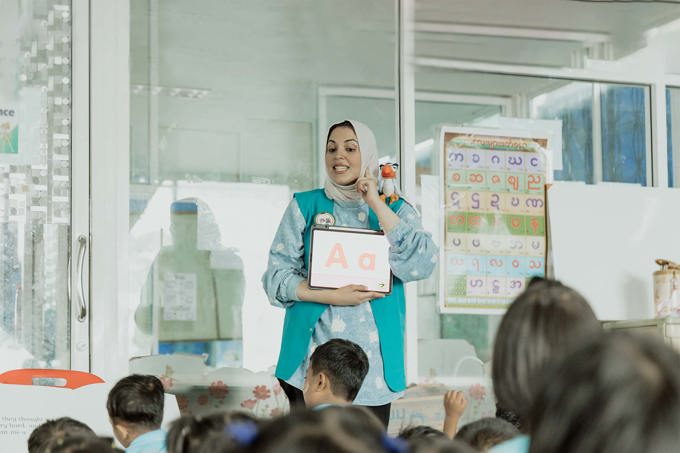
Educational excellence in the UAE continues to reach new heights, driven by institutional support and the dedication of outstanding professionals. Recently, Farah Jassim AlKhawajah, a Master of Education (M.Ed.) candidate at the American University in Dubai, was awarded the Khalifa Educational Award in the Creative Teacher category for the Arab World. This recognition serves as a clear indicator of what happens when academic rigor meets innovative classroom practice.
The Khalifa Educational Award is widely regarded as one of the highest honors in the regional education sector. It does not simply reward tenure or basic competency; it evaluates innovation, excellence, and measurable impact in teaching practices. For educators working in the UAE and across the Arab world, this award highlights the specific qualities that define modern, effective instruction. Winning this award requires a teacher to go beyond traditional classroom approaches and create meaningful, lasting learning experiences that actively inspire students.
Farah’s achievement places her among a select group of educators who are actively contributing to the advancement of learning standards regionally and internationally. For professionals monitoring their own career trajectories in education, understanding the criteria behind such prestigious awards provides a valuable roadmap for professional development.
Defining Creative Teaching in Modern Classrooms
Creative teaching is often misunderstood as merely incorporating arts and crafts into lesson plans. In reality, it represents a fundamental shift in how educators approach instructional design, student engagement, and knowledge retention. Creative teaching requires the ability to adapt pedagogical strategies to meet diverse learning needs, leveraging innovative methods to make complex concepts accessible.
Moving Beyond Traditional Lecture Models
The traditional lecture-based model of education, where students passively receive information, is no longer sufficient to prepare learners for the complexities of the modern workforce. Creative teachers actively dismantle this model by introducing interactive, student-centered learning environments. This includes the implementation of project-based learning, where students solve real-world problems, and flipped classrooms, where instructional content is consumed at home and class time is dedicated to application and critical thinking.
Furthermore, creative teaching involves the seamless integration of technology. Rather than using digital tools as novelties, effective educators use them to enhance collaboration, facilitate research, and provide immediate feedback. This strategic use of technology is a key evaluation metric for awards like the Khalifa Educational Award.
Connecting Academic Theory with Real Classroom Impact
One of the most difficult challenges for educators is bridging the gap between theoretical pedagogy and practical classroom execution. As Farah noted regarding her achievement, her experience at the American University in Dubai played a critical role in helping her connect academic theory with real classroom impact. Creative teaching relies on this connection; an educator must possess a strong theoretical foundation to understand why a specific intervention works, combined with the practical skills to execute it effectively under the variable conditions of a live classroom.
How the American University in Dubai Prepares Education Leaders
The success of an educator is rarely an isolated event. It is typically the result of a supportive academic environment that challenges professionals to refine their craft. The Graduate School of Education (GSE) at the American University in Dubai has established itself as a catalyst for this type of professional growth.
The Role of the Master of Education (M.Ed.) Program
The M.Ed. program at the American University in Dubai is structured to cultivate the exact qualities recognized by the Khalifa Educational Award. The curriculum emphasizes social responsibility, evidence-based practices, and innovative pedagogy. Students in the program are encouraged to critically analyze their own teaching methods, conduct action research, and implement iterative improvements in their professional settings.
Dr. Nadera Alborno, Dean of the GSE, emphasized that the program strives to cultivate a spirit of innovation, dedication, and purpose. This is achieved through a combination of advanced coursework, faculty mentorship, and a peer-learning environment where experienced educators share diverse perspectives from various educational contexts across the UAE and the broader region.
Schedule a free consultation to learn more about how the M.Ed. program can align with your professional goals.
Fostering Innovation and Social Responsibility
A distinguishing feature of the university’s approach is its focus on preparing leaders who prioritize social responsibility. Education is inherently a communal act, and creative teaching must account for the cultural, social, and emotional contexts of the students. Graduates from the program are equipped to design inclusive learning experiences that respect diverse backgrounds while pushing academic boundaries. This holistic approach to teacher preparation is precisely what enables candidates to compete—and win—at the highest levels of educational recognition.
Submit your application today to join a community of educators driving change in the classroom.
Actionable Steps to Integrate Creative Teaching Strategies
Achieving recognition for creative teaching is the result of consistent, deliberate practice. Educators looking to elevate their own instructional methods can adopt several concrete strategies:
- Implement Interdisciplinary Units: Design learning modules that require students to draw on skills from multiple subject areas. This mirrors real-world problem-solving and forces creative instructional design.
- Leverage Formative Assessment Creatively: Move beyond standard quizzes. Use digital portfolios, peer-assessment protocols, and interactive presentations to gauge student understanding in ways that also build their communication skills.
- Redesign Physical and Digital Learning Spaces: The environment dictates the behavior. Experiment with flexible seating, collaborative digital whiteboards, and station-rotation models to break the monotony of traditional classroom layouts.
- Prioritize Student Agency: Allow students to have a voice in how they demonstrate their learning. Providing choice in assignments and assessments naturally fosters engagement and allows teachers to assess deeper understanding.
Monitor Your Professional Growth as an Educator
Continuous improvement in teaching requires systematic self-reflection. Educators must actively monitor their professional growth to ensure they are progressing toward their goals. This involves establishing clear, measurable objectives for the academic year, soliciting regular feedback from students and peers, and maintaining a professional development portfolio.
When you monitor your progress, you can identify patterns in your teaching that require adjustment. For instance, if assessment data consistently shows a lack of student retention in a specific unit, a creative teacher will analyze the instructional method used, research alternative pedagogical approaches, and implement a new strategy. This cycle of planning, acting, observing, and reflecting is the cornerstone of educational excellence.
Share your experiences in the comments below regarding how you track and measure your teaching innovations.
Advancing Educational Standards Across the Arab World
The recognition of an American University in Dubai M.Ed. candidate at the Khalifa Educational Award is more than a singular accomplishment; it is a reflection of the broader trajectory of education in the UAE. As regional institutions continue to invest in high-quality graduate programs and educators commit to innovative classroom practices, the overall standard of education across the Arab world rises.
For current and aspiring educators, this milestone serves as a benchmark. It demonstrates that combining a strong academic foundation from a recognized institution with a relentless commitment to creative teaching produces measurable, award-winning results. The future of education depends on professionals who are willing to challenge the status quo, invest in their own continuous learning, and apply their skills to shape the next generation of thinkers and leaders.
Explore our related articles for further reading on innovative pedagogical strategies and graduate education opportunities.