
Examine How American University in Dubai Game Design Students Collaborate with France’s Gaming Campus
Bridging the Gap Between Academic Theory and Industry Practice
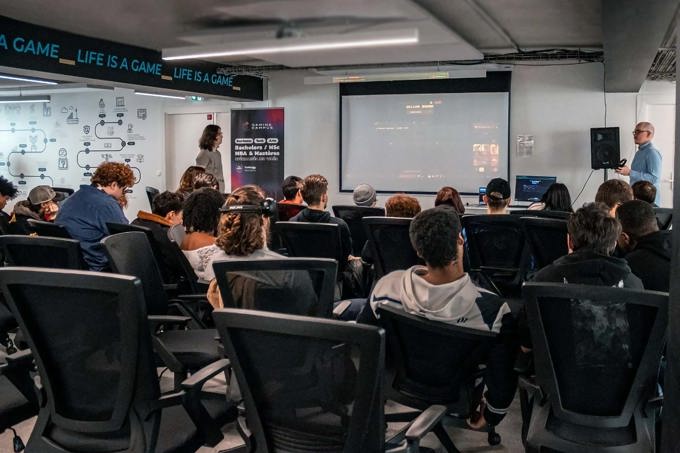
Building a successful career in the modern video game industry requires more than just technical proficiency; it demands practical experience in collaborative, cross-cultural environments. Recognizing this reality, the American University in Dubai has integrated direct international collaboration into its curriculum. Recently, seven students from the university’s Game Design program were selected to serve as junior playtesters for Gaming Campus, France’s premier gaming education network. Running from March 30 to April 30, this initiative integrates students directly into the global production ecosystem, bridging the gap between classroom theory and the rigorous demands of professional game development.
During this month-long initiative, AUD students engaged with the “Grand Projet commun (GC Awards),” an annual flagship project for third-year students at Gaming Campus. Rather than simply reviewing completed games, the AUD cohort provided structured, professional feedback on projects actively under development. This process mirrors the standard quality assurance and user experience testing phases found in major commercial studios. By participating in this real-world workflow, students learn to identify functional bugs, evaluate core mechanics, and assess player engagement—skills that are notoriously difficult to teach exclusively through textbooks and lectures.
Have questions? Write to us!
The Mechanics of Cross-Cultural Game Development
Modern game studios frequently operate across multiple continents, with development teams scattered across North America, Europe, and Asia. The collaboration between the American University in Dubai and Gaming Campus accurately reflects this operational model. Students from the UAE are tasked with evaluating projects built by French students, requiring all communication to occur in English as a common professional language. This setup forces participants to articulate complex design critiques clearly and diplomatically, ensuring their feedback is actionable rather than subjective.
For the French students at Gaming Campus, this partnership provides a vital “external eye.” Development teams often suffer from tunnel vision after months of working on the same project, making it difficult to see usability issues or confusing mechanics. The fresh, international perspectives offered by the AUD students help sharpen the final iterations of these student-led projects. In return, AUD students gain firsthand experience in delivering documented feedback grounded in solid game design fundamentals. They learn to frame their critiques constructively, focusing on how specific mechanics impact the overall player experience rather than simply stating whether they liked or disliked a feature.
Schedule a free consultation to learn more.
Developing Analytical Thinking Through Structured Playtesting
Playtesting is a discipline in its own right within the game industry. It requires a specific mindset: the ability to switch between playing a game for enjoyment and analyzing it for structural integrity. Through this collaboration, AUD students refine their analytical thinking by breaking down complex interactive systems into individual components. They evaluate variables such as difficulty curves, user interface clarity, and the alignment between gameplay mechanics and narrative themes. Documenting these findings teaches students how to write professional QA reports, an essential skill that significantly increases their employability upon graduation.
Evaluating the American University in Dubai Game Design Curriculum
The success of this international collaboration is a direct result of the robust foundation provided by the Bachelor of Science in Game Design and Development at the American University in Dubai. Housed within the Mohammed Bin Rashid School for Communication (MBRSC), the program approaches gaming not just as a technical endeavor, but as a sophisticated medium for storytelling and interactive communication. This interdisciplinary focus ensures that graduates understand both the programming languages required to build games and the narrative techniques required to make them compelling.
A defining characteristic of this curriculum is its strategic partnership with the University of Southern California (USC) School of Cinematic Arts, which consistently ranks as one of the top game design programs in the United States. By adapting elements of this world-renowned methodology to the context of the UAE, AUD has established itself as a leader in regional gaming education. The program was specifically designed to integrate technical development with creative storytelling, ensuring that students graduate as well-rounded developers capable of contributing to multiple stages of the production pipeline.
As the UAE’s first Bachelor of Science in Game Design and Development, the program occupies a unique position in the local educational landscape. It provides a structured, academically rigorous pathway for students who wish to enter a rapidly growing industry, moving beyond short-term boot camps to offer a comprehensive, four-year degree.
Explore our related articles for further reading.
Aligning with the Dubai Program for Gaming 2033
The strategic value of the AUD Game Design program extends beyond individual student success; it directly supports broader economic initiatives set forth by the UAE government. The Dubai Program for Gaming 2033 represents a comprehensive effort to transform Dubai into a global hub for the gaming industry. Achieving this ambitious goal requires a localized, highly skilled workforce capable of driving innovation in game development, publishing, and esports management.
By fostering global education partnerships, such as the collaboration with France’s Gaming Campus, AUD ensures its students are exposed to international standards and workflows. When these students enter the local workforce, they bring with them a global perspective that is essential for building an industry capable of competing on the world stage. As Dr. Iyad Alsabouni, Program Coordinator of Game Design and Development at AUD, notes, the global gaming industry is projected to reach $200 billion. Preparing students to capture a share of this massive market requires an education that is inherently international, collaborative, and deeply iterative.
Why Global Education Matters for Aspiring Developers
The contrast between the French and Emirati gaming ecosystems provides a rich learning environment for students. France has a long-established history in game development, home to major studios and a strong indie scene known for artistic innovation. The UAE, conversely, represents a rapidly expanding market with immense growth potential, particularly in mobile gaming and emerging technologies. By interacting with peers in France, AUD students gain insight into mature development pipelines and different cultural approaches to game design, which they can eventually adapt and apply within the regional context of the UAE.
Furthermore, building a professional network early in one’s career is invaluable. The connections formed during these international academic partnerships often evolve into professional relationships that span across borders. Students who learn to communicate effectively across cultures during their university years are far better equipped to navigate the complexities of globalized tech companies later in their careers.
Submit your application today.
Take the Next Step in Your Game Development Career
Entering the game design industry requires a commitment to continuous learning and a willingness to adapt to constantly evolving technologies. The collaboration between the American University in Dubai and France’s Gaming Campus clearly demonstrates how modern academic institutions can simulate professional, international environments to better prepare students for graduation. By combining a USC-backed curriculum with hands-on global partnerships, AUD provides a clear, structured pathway into the gaming industry.
For aspiring developers in the UAE and the wider region, choosing a program that prioritizes real-world application and global connectivity is a critical first step. The ability to analyze games critically, communicate design flaws constructively, and understand the dynamics of cross-cultural development teams are the exact competencies that top studios look for in new hires.
Share your experiences in the comments below!