
Advance ADPKD Management: How American University in Dubai Drives Healthcare Research in the UAE
Understanding the Clinical Impact of ADPKD in the UAE
Autosomal dominant polycystic kidney disease (ADPKD) stands as one of the most prevalent inherited kidney disorders globally, serving as a leading cause of end-stage kidney failure. Characterized by the progressive development of fluid-filled cysts in the kidneys, ADPKD gradually impairs renal function over decades. For healthcare systems in the UAE and across the Middle East, addressing this genetic condition requires a coordinated, evidence-based approach to delay disease progression and improve patient quality of life. The complexity of ADPKD lies in its variable clinical presentation; while some patients experience significant symptoms in early adulthood, others may remain asymptomatic for years, making consistent efforts to monitor the disease critically important.
The economic and social burden of end-stage renal disease is substantial. Patients who progress to kidney failure require intensive interventions, such as dialysis or kidney transplantation, which place a high demand on specialized healthcare resources. Recognizing the growing need to address this condition proactively, the American University in Dubai has positioned itself at the forefront of regional healthcare research, facilitating critical dialogues that bridge the gap between international standards and local clinical practice.
Schedule a free consultation to learn more about the research initiatives at the American University in Dubai.
The Role of Academic-Clinical Partnerships in Healthcare Research
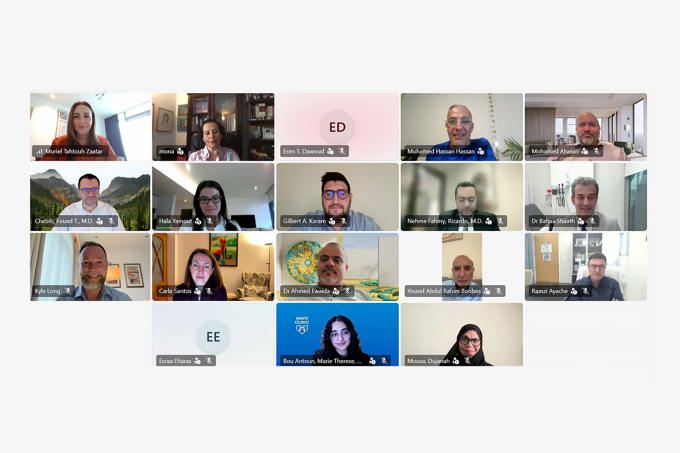
Effective healthcare research relies heavily on the synergy between academic institutions and clinical facilities. Recently, the Department of Biological and Physical Sciences at the American University in Dubai demonstrated this principle by convening a specialized PKD Expert Forum. Held virtually, this event was organized in strategic partnership with the Mayo Clinic College of Medicine and Science, alongside the Mayo Clinic Florida PKD Center of Excellence. This collaboration represents a significant milestone for healthcare research in the region, bringing together leading nephrology experts, government clinicians, and private healthcare practitioners to focus exclusively on advancing ADPKD care.
The forum received vital support from prominent regional entities, including M42, the Abu Dhabi Biobank, and Hikma Pharmaceuticals. The involvement of these organizations highlights the robust infrastructure available in the UAE to support complex medical research. Biobanks are essential for storing genetic and clinical data securely, while pharmaceutical partnerships ensure that research findings can eventually translate into accessible treatments. By fostering these multi-sector partnerships, the American University in Dubai is establishing a sustainable framework for ongoing medical inquiry that extends far beyond a single academic event.
Bridging Local and International Expertise
During the opening remarks, Dr. Kyle Long, President of the American University in Dubai, emphasized the institution’s dedication to academic-clinical collaboration in alignment with national health priorities. This sentiment was echoed by Dr. Muriel Tahtouh Zaatar, Chair of the Department of Biological and Physical Sciences, who noted that ADPKD presents distinct diagnostic and clinical challenges, particularly regarding early detection. By creating a space for local UAE practitioners to interact directly with international experts like Dr. Fouad T. Chebib, Director of the Mayo Clinic Florida PKD Center of Excellence, the forum facilitated a direct transfer of specialized knowledge.
This cross-pollination of ideas ensures that clinical approaches proven effective in international settings can be carefully evaluated and adapted for the diverse patient populations found within the UAE. The first expert session, moderated by Dr. Mona Alrukhaimi, President of the Emirates Medical Association – Nephrology and Transplantation Society, specifically examined the patient journey. Understanding how a patient navigates from primary care to a nephrologist in the UAE helps identify bottlenecks and variations in care across different healthcare settings, allowing for the development of more streamlined, equitable care pathways.
Strategies to Monitor and Manage ADPKD Effectively
A central theme of the forum was the optimization of strategies used to monitor ADPKD. Because the disease progresses silently in many patients, relying solely on symptomatic presentation leads to late-stage interventions. Instead, modern nephrology emphasizes proactive surveillance to track the physical and functional decline of the kidneys. Clinicians must regularly monitor total kidney volume (TKV) using imaging techniques such as magnetic resonance imaging (MRI) or ultrasound. Increases in TKV serve as a highly accurate biomarker for disease progression, often preceding any measurable drop in estimated glomerular filtration rate (eGFR).
Beyond imaging, healthcare providers must monitor blood pressure rigorously, as hypertension is both a common early symptom and a driver of further kidney damage. Managing cardiovascular risk factors is equally vital, as ADPKD patients face a heightened risk of cardiac complications, including valvular heart disease and intracranial aneurysms. The expert discussions highlighted that while the tools to monitor ADPKD exist, their application varies significantly across different healthcare settings in the UAE. Standardizing these monitoring protocols across government and private institutions is a necessary step to ensure that all patients receive a consistent standard of care, regardless of where they seek treatment.
Submit your application today to join the Department of Biological and Physical Sciences and contribute to vital medical research.
Integrating Real-World Data and KDIGO Guidelines
The second expert session of the forum, moderated by Dr. Mohamad Al Seiari, Chief Medical Officer at Sheikh Khalifa Medical City, tackled the practical challenges of implementing these monitoring strategies at a system level. A primary focus was the integration of real-world data into clinical decision-making. While clinical trials provide controlled data on disease progression, real-world evidence captures the complexities of patient behavior, comorbidities, and treatment adherence in everyday clinical settings. Utilizing the resources of the Abu Dhabi Biobank, researchers can begin to aggregate this localized data to better characterize the specific disease burden and treatment patterns within the UAE population.
Furthermore, the session stressed the importance of aligning local clinical practices with international guidance, specifically the KDIGO (Kidney Disease: Improving Global Outcomes) guidelines. KDIGO provides comprehensive, evidence-based recommendations for the evaluation and management of ADPKD, covering everything from diagnostic criteria for at-risk individuals to the use of targeted therapies like tolvaptan. Because tolvaptan can slow kidney decline but requires strict monitoring of liver function, adherence to KDIGO guidelines ensures that local care pathways meet global safety and efficacy benchmarks. This alignment also facilitates easier participation in multi-national clinical trials and ensures that both expatriate and local patients receive care consistent with international best practices.
Key Takeaways from the AUD PKD Expert Forum
The collaborative environment of the PKD Expert Forum yielded several actionable outcomes for the medical community. First, there was a strong consensus on the urgent need to develop clearer, more accessible pathways for genetic screening and family counseling. Because ADPKD is an autosomal dominant condition, each child of an affected parent has a 50 percent chance of inheriting the mutation. Establishing systematic screening protocols for at-risk relatives can identify the disease decades before clinical symptoms manifest, opening a much wider window for therapeutic intervention and lifestyle modification.
Second, the forum underscored the necessity of improved patient classification. ADPKD is not a monolithic disease; patients progress at vastly different rates. By utilizing validated imaging classifiers and genetic testing, clinicians can stratify patients into distinct risk categories, such as rapid versus slow progressors. This stratification is crucial for determining the appropriate timing for initiating disease-modifying therapies. The exchange of cross-institutional insights during the forum helped identify the existing gaps in this classification process within regional healthcare networks and proposed practical, stepwise solutions to close them.
Have questions? Write to us to learn more about upcoming academic forums and research opportunities.
Shaping the Future of Patient-Centered Care
The discussions initiated at the American University in Dubai represent an important step toward establishing a unified, UAE-aligned approach to ADPKD management. By building on existing evidence and adapting evolving global guidance to fit the local context, the region can significantly improve long-term outcomes for patients battling this chronic condition. The involvement of high-level stakeholders—from university leadership to chief medical officers of major hospitals—indicates a strong institutional commitment to moving beyond theoretical discussions into tangible clinical improvements.
This initiative also provides a unique advantage for students in the biological and pre-medical sciences. When universities actively host and participate in high-level healthcare research, students gain exposure to current clinical debates, real-world data applications, and professional networking opportunities that standard curricula cannot provide. Looking forward, the data and relationships generated from this forum are expected to inform ongoing collaborative research between AUD, the Mayo Clinic, and regional partners. As more real-world data is collected and analyzed through networks like the Abu Dhabi Biobank, the medical community will be better equipped to design targeted interventions that address the specific needs of the UAE population.
Ultimately, advancing healthcare research in this manner not only elevates the standard of nephrology care but also reinforces the position of the UAE as a regional hub for medical innovation and academic excellence. Sustained investment in these academic-clinical partnerships will be the defining factor in successfully managing chronic genetic diseases like ADPKD in the decades to come.
Explore our related articles for further reading on regional medical advancements and academic initiatives.