
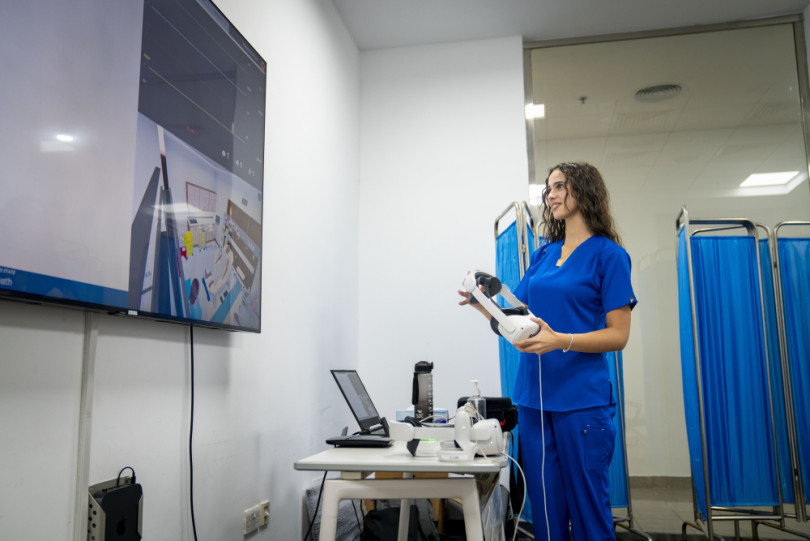
Medical education in the UAE is moving away from traditional, textbook-heavy learning models. Today, technology adaptation defines how future physicians acquire foundational knowledge, practice clinical skills, and prepare for complex healthcare environments. Ajman University has recognized this critical industry shift, actively integrating advanced digital tools and artificial intelligence into its curriculum to ensure graduates are ready for modern medical demands.
For prospective and current students, understanding how technology adaptation shapes medical education is essential for making informed academic and career decisions. The healthcare sector now relies heavily on electronic health records, telemedicine platforms, and AI-assisted diagnostics. Consequently, the training grounds for future doctors must reflect these realities. This article examines the specific ways Ajman University is updating its instructional methods and what these changes mean for your future career in medicine.
Schedule a free consultation to learn more about our medical programs and admission requirements.
The Mechanics of Technology Adaptation in Healthcare Training
Technology adaptation in an academic context refers to the deliberate integration of digital tools, platforms, and systems designed to enhance how students learn complex medical concepts. It moves beyond simply uploading lecture slides to an online portal. True technology adaptation involves creating comprehensive digital ecosystems that interact with the student, respond to their performance, and adjust the educational experience accordingly.
In the UAE, healthcare infrastructure is developing rapidly, with hospitals and clinics adopting sophisticated digital health solutions. Medical education must keep pace with this evolution. When you train in an environment that mirrors the technological reality of modern hospitals, you reduce the learning curve when you enter residency or clinical practice. You learn to navigate electronic health systems, interpret digital readouts, and utilize clinical software as a natural extension of your medical training.
Furthermore, technology adaptation breaks down traditional learning barriers. Digital platforms allow you to access vast medical libraries, research databases, and recorded expert lectures from anywhere. This flexibility ensures that your learning is not confined to the physical classroom or limited by strict schedules, providing a more accommodating and responsive educational experience.
Evaluating Digital Infrastructure at Ajman University
Ajman University approaches technology adaptation by embedding digital-first learning strategies across its academic programs. The university utilizes advanced Learning Management Systems (LMS) that serve as the central hub for student activity. These platforms do more than distribute course materials; they actively track your academic progress, identify areas where you may be struggling, and suggest targeted resources to reinforce your understanding.
Students can monitor their own performance metrics through these systems, gaining immediate feedback on practice assessments and assignments. Instead of waiting weeks for a graded exam, you can adjust your study habits in real time. The university also incorporates collaborative digital tools that allow you to engage in virtual case studies with peers, simulating the multidisciplinary team meetings that are standard in modern hospitals.
Additionally, Ajman University integrates interactive 3D anatomical models into its coursework. Rather than relying solely on textbook diagrams, you can manipulate virtual structures to understand spatial relationships within the human body. This visual and interactive approach to technology adaptation helps solidify complex biological concepts that are critical for clinical practice.
Applying Artificial Intelligence to Medical Education
Artificial intelligence has moved from a theoretical concept to a practical tool within medical education. At Ajman University, AI is applied to streamline the learning process and provide highly individualized educational experiences.
Personalized Study Paths and Intelligent Tutoring
AI-powered systems analyze your interaction with course materials to create customized study paths. If the system detects that you are spending excessive time on specific pharmacological interactions but mastering anatomy quickly, it will adjust your curriculum to allocate more time and resources to pharmacology. Intelligent tutoring systems act as round-the-clock study assistants, answering queries, providing step-by-step explanations, and allowing you to review difficult topics as many times as necessary without judgment.
Clinical Decision-Making and Diagnostic Accuracy
AI is also used to train students in clinical reasoning. Through AI-assisted diagnostic platforms, you can practice interpreting medical imaging, lab results, and patient histories. The AI can highlight subtle anomalies in an X-ray or MRI, serving as a teaching tool to improve your diagnostic eye. More importantly, you learn to monitor AI-generated insights and cross-reference algorithmic recommendations against your own clinical judgment. This training is vital; it teaches you to use AI as a supplementary tool rather than a replacement for medical expertise.
Submit your application today to join a forward-thinking medical program at Ajman University.
Implementing Virtual Simulations for Risk-Free Practice
One of the most significant advancements in medical education is the use of virtual simulations. Before interacting with actual patients, you need a safe environment to practice procedures, make mistakes, and learn from those errors without causing harm. Ajman University employs AI-driven virtual patients that respond realistically to your treatment decisions.
In these simulated environments, you might be tasked with managing a patient in cardiac arrest. The AI controls the patient’s vital signs, responding accurately to the medications you administer or the procedures you perform. If you make an incorrect decision, the virtual patient’s condition will deteriorate, providing immediate, consequential feedback. This method of technology adaptation allows you to experience hundreds of rare or high-stakes clinical scenarios, building both competence and confidence before you ever step into a clinical ward.
Addressing the Limitations of Digital-First Learning
While the benefits of technology adaptation are substantial, it is important to acknowledge the limitations of digital-first learning. Not all technology inherently improves the educational experience; poorly implemented tools can complicate learning and create unnecessary friction. Digital fatigue is a documented issue among students who spend excessive hours in front of screens, and it can diminish cognitive performance.
Furthermore, certain clinical skills—such as conducting a physical examination, suturing a wound, or establishing bedside rapport with a patient—require physical, hands-on practice that no virtual simulation can fully replicate. Successful medical education programs recognize these boundaries. Ajman University balances its technology adaptation by ensuring that digital tools enhance, rather than replace, traditional mentorship and physical clinical rotations. The goal is to combine the efficiency and safety of virtual training with the irreplaceable human elements of medicine, such as empathy, ethical reasoning, and interpersonal communication.
Building a Competitive Edge in the Healthcare Job Market
The practical application of technology during your studies translates directly to career advantages. Healthcare employers in the UAE and globally are actively seeking graduates who possess digital literacy alongside clinical knowledge. When residency programs and hospitals evaluate candidates, proficiency with electronic health records, telemedicine interfaces, and AI diagnostic tools distinguishes you from applicants who only have traditional training.
By learning to monitor patient data through digital dashboards, interpret predictive analytics, and collaborate effectively with AI systems, you position yourself as a highly adaptable professional. You become a physician who can seamlessly integrate into modern, tech-heavy clinical environments from day one. As healthcare continues to evolve, your early exposure to these systems ensures your skills remain relevant and in demand.
Explore our related articles for further reading on healthcare careers and technological advancements in medicine.
Making Informed Decisions About Your Medical Studies
Choosing where to study medicine is a major decision that impacts your career trajectory for decades. As you evaluate different programs, consider how each institution approaches technology adaptation. Look for universities that provide access to advanced LMS platforms, AI-assisted learning tools, and high-fidelity virtual simulations. Assess whether the curriculum balances digital innovation with essential hands-on clinical experience.
Ajman University continues to adapt its medical education framework to meet the rigorous demands of the modern healthcare landscape. By prioritizing the integration of AI, virtual simulation, and data-driven learning, the university provides an educational environment that prepares you for the realities of 21st-century medicine. Understanding these advancements allows you to align your educational choices with the future needs of the healthcare industry.
Have questions about our technology-integrated curriculum? Write to us!