
Monitor How American University in Dubai Advances UAE Entrepreneurship Through Faculty Mentorship
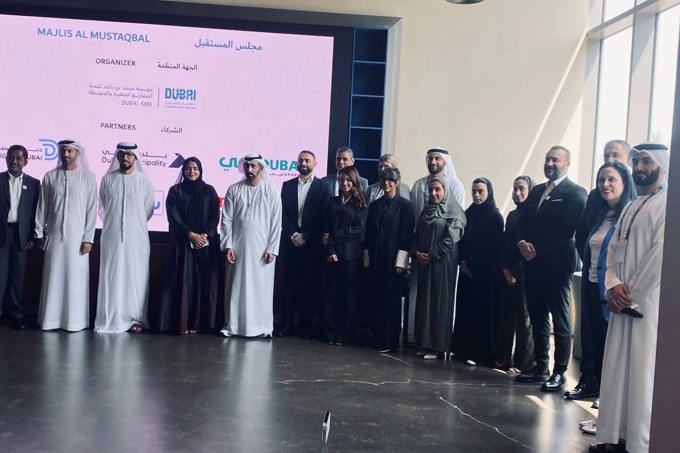
As industry analysts monitor the rapid expansion of the startup ecosystem in the UAE, the role of higher education in shaping sustainable businesses becomes increasingly clear. Building a successful venture requires more than just a novel idea; it demands a rigorous understanding of market dynamics, financial modeling, and strategic positioning. Recently, faculty members from the School of Business at the American University in Dubai (AUD) demonstrated this principle by mentoring emerging founders at Dubai SME’s Majlis Al Mustaqbal. This initiative provided a practical framework for startups to refine their operations and improve their investment readiness.
Bridging Academic Theory and Startup Practice in the UAE
The gap between an early-stage concept and a commercially viable enterprise is often vast. Many first-time founders possess deep technical knowledge or a strong passion for their product but lack the strategic business acumen required to scale. To address this, the American University in Dubai actively integrates its academic expertise into the broader UAE entrepreneurial community. Rather than operating solely within the confines of a classroom, AUD faculty engage directly with the local startup landscape to provide structured, actionable guidance.
At the Majlis Al Mustaqbal event, organized by Dubai SME, AUD’s involvement went beyond traditional lecturing. Faculty members participated in hands-on workshops, interactive group discussions, and tailored one-on-one mentoring sessions. This approach ensures that the theoretical frameworks taught in university programs—such as market validation, customer segmentation, and revenue logic—are applied directly to real-world business challenges. By observing how founders react to market pressures and strategic questioning, educators can adjust their methods to deliver maximum impact.
The Role of Dubai SME’s Majlis Al Mustaqbal
Dubai SME’s Majlis Al Mustaqbal serves as a structured innovation journey for emerging entrepreneurs. The program is specifically designed to guide participants through challenge exploration, rapid prototyping, and investor pitch development. For startups participating in this intensive program, the stakes are high. They must rapidly iterate on their ideas, test their assumptions, and prepare to present their refined concepts to a panel of evaluators and potential investors.
The presence of experienced academics from the American University in Dubai added a layer of analytical rigor to this process. While entrepreneurs often focus on the novelty of their solutions, academic mentors are trained to identify structural weaknesses in a business model. This dynamic creates a productive tension that ultimately leads to stronger, more resilient business strategies capable of thriving in the competitive UAE market.
Structuring Early-Stage Ideas for Investment Readiness
One of the primary focuses of the AUD faculty during the mentorship sessions was helping founders build robust business foundations. A common pitfall for early-stage startups is attempting to scale before establishing a clear, repeatable, and profitable core operation. AUD’s mentorship addressed this by breaking down complex business concepts into manageable, actionable components.
Refining the Business Model Canvas
The business model canvas is a standard strategic management tool, but applying it effectively requires practice and critical thinking. AUD faculty worked closely with participating teams to evaluate and refine their canvas structures. This involved scrutinizing key partnerships, essential activities, and cost structures. Mentors challenged founders to justify their operational choices and eliminate redundant processes that could drain early-stage capital. By systematically reviewing each segment of the canvas, entrepreneurs gained a clearer picture of how their business actually functions versus how they assumed it functioned.
Clarifying Value Propositions and Customer Segmentation
A technically superior product will fail if it does not address a specific, urgent need for a clearly defined group of customers. Faculty members guided participants in sharpening their value propositions to ensure they resonated with their target demographics. This process required founders to step back from their product features and focus instead on the customer’s pain points.
Furthermore, mentors emphasized the importance of precise customer segmentation. In a diverse market like the UAE, a one-size-fits-all approach rarely succeeds. Founders were encouraged to identify their early adopters, understand their specific behaviors, and tailor their marketing and distribution strategies accordingly. This targeted approach helps startups allocate their limited resources more efficiently, improving their chances of early traction.
Developing Investor-Ready Pitches for the UAE Market
Securing funding is a critical milestone for any startup, and the ability to communicate a business idea clearly and persuasively is often the deciding factor. A significant portion of the mentorship at Majlis Al Mustaqbal was dedicated to pitch development. AUD faculty supported participants in translating their refined business concepts into compelling narratives suitable for investor audiences.
Challenging Assumptions Through Evidence-Based Thinking
Investors in the UAE are sophisticated and typically look for founders who base their projections on data rather than optimism. AUD’s academic background proved invaluable here, as faculty members pushed entrepreneurs to replace assumptions with evidence. When a founder claimed their product would achieve rapid market penetration, mentors asked for the underlying data: What do the pilot tests show? What are the customer acquisition costs? How does the pricing compare to existing alternatives?
This line of questioning forced founders to adopt a more critical, evidence-based approach to their business planning. By the end of the mentorship program, participating teams were able to present their ideas with a level of structural clarity and commercial viability that significantly improved their investment potential. They learned to articulate their revenue logic, demonstrate their scalability potential, and defend their strategic positioning against rigorous scrutiny.
Evaluating Teams for Final Recognition
The involvement of the American University in Dubai extended beyond mentoring; faculty members also served as evaluators ahead of the final recognition and awards. This dual role as both mentors and judges provided founders with a comprehensive understanding of what evaluators look for in a successful pitch. It also highlighted AUD’s growing engagement and authority within the UAE’s broader entrepreneurship ecosystem, proving that academic institutions can serve as vital partners in economic development.
Why Academic Mentorship Matters for Emerging Entrepreneurs
The collaboration between Dubai SME and the American University in Dubai underscores a vital truth: entrepreneurship cannot be learned in a vacuum. While practical experience is irreplaceable, the structured frameworks, analytical tools, and objective perspectives provided by academic professionals offer a distinct advantage. Faculty members like Dr. Maya Abou Zahr (Interim Director of AUD’s Entrepreneurship and Innovation Center), Dr. Farah Arkadan (Chair of the Department of Management and Marketing), Dr. Lena Kurban (Chair of the Department of Decision Sciences and General Business), Dr. Racha Abdrabbo (innovation specialist), and Dr. Gesualda Iodice (Assistant Professor of General Business) bring years of research and industry analysis to the table.
For entrepreneurs in the UAE, accessing this caliber of mentorship provides a competitive edge. It allows them to stress-test their ideas in a safe environment, identify blind spots, and build the confidence needed to pitch to actual investors. As the startup ecosystem continues to mature, the integration of university-level business acumen with grassroots entrepreneurial energy will be a key driver of sustainable economic growth.
Whether you are an aspiring founder looking to validate your first idea or an established business owner aiming to scale, understanding the fundamentals of business modeling and strategic communication is non-negotiable. Engaging with institutions that prioritize these skills ensures you remain adaptable and prepared for the complexities of the modern market.
Share your experiences with startup mentorship in the comments below.