
Advancing Inclusive Education and Teacher Preparation in the UAE: The American University in Dubai and DYStinct Learners Partnership
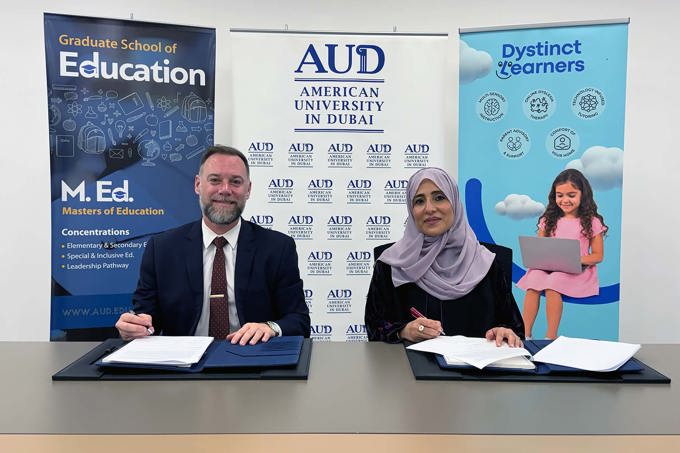
Classrooms across the United Arab Emirates are becoming more diverse every year, and schools are responding with a clear commitment: every student, regardless of ability, deserves access to high-quality learning. A recent milestone in this effort is the memorandum of understanding (MOU) signed between the American University in Dubai (AUD) and DYStinct Learners, an organization dedicated to supporting students with distinct learning needs. The agreement signals a coordinated push to strengthen inclusive education and teacher preparation in the UAE at a time when demand for skilled educators has never been higher.
This article explains what the partnership involves, why inclusive education has become a national priority, and how current and future teachers can build the practical skills that inclusive classrooms require. If you are considering a career in education—or you are already teaching and want to deepen your expertise—the information below will help you plan your next steps.
Why Inclusive Education Matters Across the UAE
Inclusive education is the practice of ensuring that students of determination—learners with physical, sensory, intellectual, or learning differences—study alongside their peers in mainstream settings, with the supports they need to succeed. The UAE has made this approach a cornerstone of its education policy. Federal and local initiatives, including the national “Schools for All” framework, encourage private and public schools to remove barriers, adapt curricula, and provide individualized support plans.
The policy shift has created a genuine need for teachers who understand how to differentiate instruction, assess varied learning needs, and collaborate with specialists and families. Many schools in Dubai and the wider UAE now employ dedicated inclusion teams, and regulatory bodies continue to raise expectations for how schools serve students of determination. For educators, this environment presents both a professional responsibility and a career opportunity. Teachers who can demonstrate competence in inclusive practices stand out in a competitive job market.
The partnership between the American University in Dubai and DYStinct Learners responds directly to this demand by connecting academic training with hands-on expertise in learning differences such as dyslexia, ADHD, and related conditions.
What the AUD and DYStinct Learners Partnership Involves
A memorandum of understanding is more than a symbolic gesture. In agreements of this kind, two organizations commit to concrete forms of collaboration that draw on each partner’s strengths. Based on the profiles of both institutions, the AUD–DYStinct Learners MOU focuses on several areas that matter for inclusive education:
- Professional development for educators. Workshops, seminars, and training sessions that give teachers evidence-based strategies for supporting learners with distinct needs.
- Practical training opportunities. Pathways that allow AUD education students to observe and practice inclusive teaching methods in real settings, guided by specialists.
- Research and knowledge sharing. Joint efforts to study what works in UAE classrooms and to share those findings with the wider education community.
- Community awareness. Initiatives that help parents, school leaders, and the public understand learning differences and the value of inclusive schooling.
The value of this collaboration lies in its complementarity. Universities bring research capacity, accreditation standards, and structured curricula; organizations such as DYStinct Learners bring day-to-day experience supporting children whose learning profiles do not fit traditional molds. When these strengths combine, teacher preparation becomes more grounded in classroom reality.
Teacher Preparation at the American University in Dubai
The MOU builds on AUD’s existing strengths in education. Through its Graduate School of Education, the American University in Dubai offers programs designed for people who want to teach or advance in education careers in the UAE and beyond. Explore the Graduate School of Education’s offerings to see which pathway matches your background and goals.
Master of Education (M.Ed.)
The Master of Education is a graduate degree that prepares educators for leadership roles in schools and educational institutions. Coursework covers curriculum design, assessment, educational research, and pedagogy, giving graduates both theoretical grounding and applied skills. For teachers who aspire to roles such as instructional coordinator, department head, or school administrator, the M.Ed. provides a recognized credential that supports career progression.
Professional Postgraduate Diploma in Teaching
The Professional Postgraduate Diploma in Teaching serves graduates who hold a bachelor’s degree in a field other than education but want to enter the teaching profession. The diploma focuses on practical classroom competence: lesson planning, classroom management, assessment methods, and the professional standards expected of teachers in the UAE. It is a direct route to teacher licensure readiness for career changers and recent graduates alike.
Both pathways emphasize applied learning. Students engage with case studies, complete field-based components, and receive feedback from faculty with real classroom experience. Flexible scheduling options make it possible for working teachers to continue earning while they study—an important consideration for professionals already employed in UAE schools.
Monitor Progress: The Core Skill of Inclusive Teaching
Among all the competencies that inclusive classrooms demand, one stands out: the ability to monitor student progress systematically. Teaching a diverse group of learners is not a matter of delivering one lesson and hoping it reaches everyone. Effective inclusive educators collect evidence continuously, analyze it, and adjust instruction accordingly.
In practice, this means several things:
- Formative assessment. Short, frequent checks for understanding—exit tickets, quick quizzes, observation notes—that reveal which students are keeping up and which need reteaching.
- Individualized education plans (IEPs). For students of determination, teachers track progress against specific, measurable goals and share updates with families and support specialists.
- Data-informed differentiation. When monitoring shows that a student is falling behind in reading fluency, for example, the teacher adjusts grouping, materials, or pacing rather than waiting for an end-of-term exam to reveal the problem.
- Collaboration. Monitoring is not a solo task. Inclusive teachers coordinate with learning support staff, counselors, and parents so that everyone works from the same picture of each child’s progress.
Programs like AUD’s M.Ed. and teaching diploma treat monitoring and assessment as central topics rather than afterthoughts. Graduates leave with frameworks they can apply immediately—whether in a British-curriculum school in Dubai, an American school in Abu Dhabi, or a public school elsewhere in the UAE. Review the program curricula in detail, and schedule a consultation with an admissions advisor if you want to discuss how the coursework fits your current role.
Career Opportunities in Inclusive Education Across the UAE
The expansion of inclusive education policy has widened career options for qualified educators. Schools throughout the UAE actively recruit professionals who can support diverse learners, and the demand extends well beyond traditional classroom teaching roles. Positions commonly available include:
- Inclusion teachers and learning support specialists who work directly with students of determination in mainstream classrooms.
- Special educational needs coordinators (SENCOs) who design school-wide inclusion strategies and manage support staff.
- Intervention teachers focused on literacy, numeracy, or behavioral support for students who need targeted help.
- Advisory and training roles within education consultancies and organizations that serve schools, such as DYStinct Learners.
Salaries and responsibilities vary by school and emirate, but the trend is consistent: credentials matter. Schools increasingly expect inclusion staff to hold relevant graduate qualifications, and teachers with a recognized M.Ed. or teaching diploma negotiate from a stronger position. The partnership between AUD and DYStinct Learners adds another layer of credibility, because it connects academic credentials with recognized expertise in learning differences.
Practical Steps for Aspiring and Practicing Educators
If the intersection of inclusive education and teacher preparation interests you, a structured approach will help you move forward efficiently:
- Assess your starting point. If you hold a bachelor’s degree in education, the M.Ed. may be the natural next step. If your degree is in another field, the Professional Postgraduate Diploma in Teaching is designed for you.
- Check admission requirements early. Gather transcripts, references, and proof of English proficiency well before application deadlines.
- Consider timing. Many educators plan their studies around the school calendar, using summer breaks or lighter terms for intensive coursework.
- Investigate funding. Review available scholarships and financial aid options; universities frequently support practicing teachers and high-achieving applicants.
- Submit your application. Once your documents are ready, submit your application to the American University in Dubai to join the upcoming intake and start building your inclusive teaching skill set.
Building Inclusive Classrooms Starts With Prepared Teachers
The MOU between the American University in Dubai and DYStinct Learners reflects a simple truth: inclusive education succeeds when teachers are prepared for it. Policy can mandate access, but it is trained educators who make inclusion work in daily classroom life—by adapting lessons, monitoring progress carefully, and partnering with families.
For teachers and career changers in the UAE, the moment is favorable. National policy favors inclusion, schools are hiring, and academic pathways exist locally through AUD’s Graduate School of Education. Have questions about which program suits your goals? Write to us, or share your experiences with inclusive education in the comments below. You can also explore our related articles on education careers and professional development for further reading.