
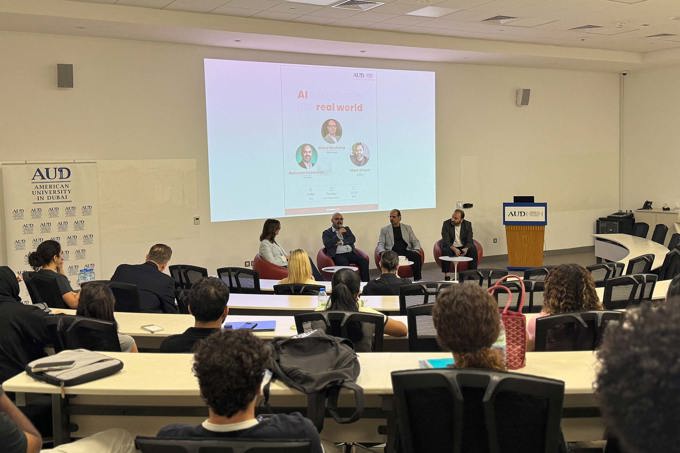
The American University in Dubai (AUD) recently brought together industry leaders for a candid discussion on artificial intelligence, moving past the buzzwords to examine what companies are actually doing with AI today. The panel, titled “AI Adoption in the Real World: What Companies Are Actually Doing (vs. What’s Just Hype)”, offered students, faculty, and professionals a practical look at how AI is being integrated across sectors such as manufacturing, consumer goods, and marketing. For anyone considering a career in technology, business, or engineering, the insights shared provide a clear roadmap of the skills and mindsets that will matter in the coming years.
Why AUD Hosted an Industry Panel on AI Adoption
AUD’s School of Business organized the event as part of its ongoing effort to bridge classroom learning with real‑world practice. By inviting practitioners who are actively implementing AI solutions, the university aims to give students a grounded view of the technology’s opportunities and limitations. The discussion also highlighted how AI adoption is not merely a technical upgrade but a strategic shift that touches people, processes, and data.
Call to Action: If you are exploring study options that combine business acumen with technical exposure, learn more about AUD’s undergraduate programs today.
Key Insights from the Panel: Beyond the Hype
The three panelists—Bahman Kazemian (Founder & CEO of InnovaSense), Milad Rouhana (Managing Director, Perfetti Van Melle MENAP), and Marc Ghosn (CEO of Wavemaker MENA)—shared concrete examples of AI delivering value while also warning against common pitfalls.
Process Optimization and Efficiency
InnovaSense’s Kazemian described how AI‑driven predictive maintenance reduced downtime in manufacturing lines by up to 30%. By analyzing sensor data in real time, the system flags potential equipment failures before they occur, allowing maintenance teams to act proactively.
Data‑Driven Decision Making
Milad Rouhana explained how Perfetti Van Melle uses machine learning models to forecast demand for its confectionery products across diverse markets. The models incorporate historical sales, promotional calendars, and even weather patterns, enabling the company to optimize inventory levels and reduce waste.
Customer Engagement and Personalization
Marc Ghosn highlighted Wavemaker’s use of natural language processing to analyze social‑media conversations and sentiment. The insights help brands tailor messaging and media placements, resulting in higher engagement rates and improved return on advertising spend.
Call to Action: Want to see how these concepts are taught in the classroom? Explore AUD’s graduate offerings that focus on analytics, AI, and innovation.
Organizational Readiness: The Hidden Factor
A recurring theme was that technology alone does not guarantee success. The panelists stressed that clear strategic objectives, leadership buy‑in, and a culture willing to experiment are essential. Many AI initiatives stall because teams lack a shared vision or resist changes to established workflows.
They recommended a phased approach: start with a well‑defined pilot project, measure outcomes against specific KPIs, and scale only after proving value. This method reduces risk and builds internal confidence in AI capabilities.
Impact on Future Careers and Skill Sets
The discussion also turned to the evolving job market. Rather than replacing professionals, AI is reshaping the competencies required to thrive. The panel highlighted three skill areas that students should cultivate:
- Technical awareness: Understanding what AI can and cannot do, without needing to be a data scientist.
- Critical thinking: Evaluating AI‑generated insights, questioning assumptions, and identifying potential biases.
- Business acumen: Translating technical outputs into actionable strategies that align with organizational goals.
By combining these abilities, graduates can become the “AI‑savvy” professionals that employers seek—people who can ask the right questions, interpret results, and drive implementation.
Call to Action: Have questions about how AUD’s curriculum prepares you for these competencies? Write to us and we’ll be happy to help.
How Prospective Students Can Leverage This Knowledge
For those considering higher education in the UAE, the panel offers a valuable lens through which to evaluate programs. Look for curricula that:
- Integrate case studies from industry partners.
- Offer hands‑on labs or projects using real data sets.
- Include modules on change management and organizational behavior.
- Provide access to career services that connect students with companies actively adopting AI.
AUD’s School of Business, School of Engineering, and the Mohammed Bin Rashid School for Communication all feature courses that touch on these elements, ensuring students receive both theoretical foundations and practical exposure.
Next Steps: Explore AI‑Focused Programs at AUD
If the realities of AI adoption have sparked your interest, AUD provides several pathways to deepen your expertise:
- Master of Science in Artificial Intelligence (M.S. in AI) – Technical depth in machine learning, computer vision, and natural language processing.
- Master of Business Administration (M.B.A.) – Strategic management with electives in analytics and innovation.
- Master of Science in Innovation Management – Focus on bringing new technologies, including AI, to market.
- Certificate Programs in Data Analytics and Digital Marketing – Short‑term options for professionals seeking to upskill quickly.
Each program emphasizes industry collaboration, guest lectures, and projects that mirror the challenges discussed in the panel.
Call to Action: Ready to take the next step? Submit your application today and begin your journey toward an AI‑ready future.
Conclusion
AUD’s industry panel served as a timely reminder that AI’s true value lies not in the technology itself but in how organizations harness it to solve real problems. The insights shared—ranging from practical applications in manufacturing and consumer goods to the critical importance of organizational readiness—offer a roadmap for students, educators, and professionals alike. By focusing on technical awareness, critical thinking, and business acumen, learners can position themselves to thrive in a world where AI is an everyday tool rather than a distant promise.
Continue the conversation: share your thoughts on AI adoption in the comments below, or explore related articles on our site to stay informed about the latest trends in education and technology.
Call to Action: Interested in more content like this? Explore our news section for further updates on events, research, and student life at AUD.