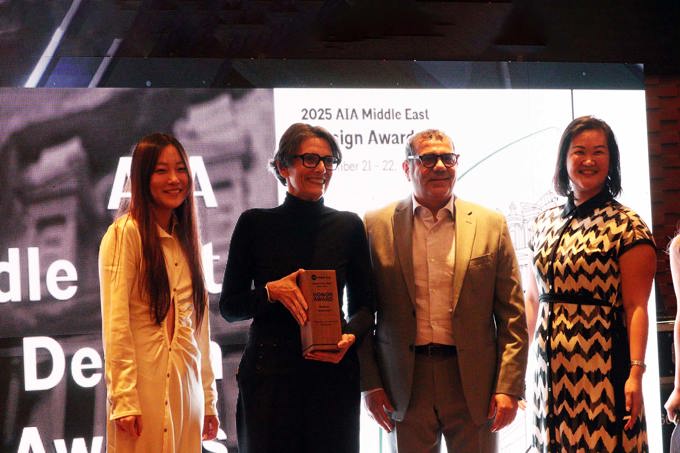
The American University in Dubai (AUD) School of Architecture, Art & Design has a distinguished record of fostering innovative talent, and a recent accolade further solidifies this reputation. Faisal Osman, an architecture alumnus, has been awarded the prestigious AIA Middle East Honor Award for his student graduation project, “Abandoned.” This recognition, presented at the AIA Middle East Year End Conference in Amman, highlights the caliber of student work emerging from AUD’s architecture program and the critical, forward-thinking perspectives its graduates bring to the field.
Understanding the AIA Middle East Honor Award
The American Institute of Architects (AIA) Middle East chapter is a key professional organization for architects practicing in the region. Its Honor Awards are highly competitive and serve to recognize exemplary projects that demonstrate design excellence, innovation, and a positive impact on the built environment. For a student project to receive this award is a significant achievement, indicating that the work meets professional standards of quality and conceptual depth. It signals to the architectural community that the student’s ideas are not only academically rigorous but also relevant to contemporary architectural discourse.
For prospective students considering a career in architecture, the success of alumni like Faisal Osman provides tangible evidence of a program’s effectiveness. It demonstrates that the curriculum, faculty mentorship, and resources at institutions like the American University in Dubai can prepare students for recognition on a regional and professional stage. Explore the Bachelor of Architecture (B.Arch.) program at AUD to learn more about the foundation for such achievements.
Project Spotlight: “Abandoned” by Faisal Osman
Under the supervision of Professor Mattia Gambardella, Faisal Osman’s project, “Abandoned,” tackles a compelling and nuanced subject: the aesthetics and cultural value of neglected structures. The project moves beyond a simple critique of decay, instead exploring how abandoned buildings serve as repositories of time, memory, and natural processes. Osman’s work reframes decay not as a failure, but as a meaningful architectural condition that can generate new forms of spatial relevance.
A Conceptual Framework for Decay
Central to the project is the preservation of the narratives embedded within forgotten places. Rather than proposing conventional restoration, “Abandoned” introduces respectful and sustainable interventions designed to reintroduce these spaces to visitors. This approach highlights a critical shift in architectural thinking—away from erasing the past and towards engaging with it thoughtfully. The project underscores how abandonment can be a catalyst for new architectural dialogue, prompting questions about memory, permanence, and our relationship with the built environment.
This type of critical inquiry is a hallmark of a robust architectural education. It requires students to develop a strong theoretical foundation alongside technical skills. The success of “Abandoned” demonstrates how a well-structured academic environment can nurture such complex, multi-layered projects. Discover how AUD’s architecture curriculum encourages critical thinking and innovation.
The Role of Faculty Mentorship in Architectural Excellence
The development of a project of this caliber is rarely a solo endeavor. Professor Mattia Gambardella’s supervision was instrumental in guiding the conceptual and technical development of “Abandoned.” Effective mentorship in architecture education involves more than just technical instruction; it involves challenging students to refine their ideas, explore diverse methodologies, and articulate their vision with clarity and conviction.
Faculty at leading architecture schools often bring a blend of academic research and professional practice to the classroom. This dual perspective helps students bridge the gap between theoretical concepts and real-world application. For students, choosing a program with accessible and experienced faculty is crucial. The recognition of “Abandoned” is a testament to the collaborative relationship between student and mentor at the American University in Dubai.
Beyond the Award: A Pattern of Recognition
The AIA Middle East Honor Award is not the only accolade Osman’s project has received. “Abandoned” was also honored with the Architecture Senior Showcase 2025 Award and the Aedas Award 2025. This pattern of recognition from different juries and institutions underscores the project’s consistent innovation, critical depth, and impact.
For a graduating student, multiple awards provide a powerful portfolio piece and a strong foundation for a professional career. They signal to potential employers and collaborators that the graduate possesses not only technical skill but also a unique and valuable perspective. This is a key differentiator in a competitive field like architecture.
Implications for Aspiring Architects and Current Students
The achievements of alumni like Faisal Osman offer several key takeaways for those considering or currently pursuing an architecture degree:
- Seek Programs with a Strong Critical Focus: Look for curricula that encourage exploration of complex themes like sustainability, cultural heritage, and adaptive reuse, not just technical drafting.
- Value Faculty Mentorship: The guidance of experienced professors can be transformative. Research the faculty profiles and their areas of expertise when evaluating a school.
- Embrace Competition and Exhibition: Participating in showcases and submitting work for awards provides invaluable experience in presenting and defending your ideas to a professional audience.
- Develop a Unique Voice: Projects that challenge conventional thinking and offer a fresh perspective are more likely to gain recognition. Don’t be afraid to explore unconventional topics.
The American University in Dubai provides an environment where these elements converge. From its accredited programs to its focus on research and innovation, the university equips students with the tools to produce work that stands out. Take the next step in your architectural journey by applying to AUD.
The Broader Impact on the UAE’s Architectural Landscape
Recognition of student work on an international stage, such as the AIA Middle East, contributes to the growing reputation of the UAE as a hub for architectural education and innovation. Universities in the region are producing graduates who are not only technically proficient but also critically engaged with global and local architectural challenges. This influx of fresh talent is vital for the continued evolution of the built environment in the UAE and the wider Middle East.
Projects like “Abandoned” encourage a more sustainable and culturally sensitive approach to architecture, aligning with broader regional goals for sustainable development and heritage preservation. As the architectural field evolves, the perspectives of new graduates will be essential in shaping future cities and communities.
Conclusion: A Testament to Educational Quality
Faisal Osman’s AIA Middle East Honor Award is a significant personal achievement and a proud moment for the American University in Dubai. It serves as a powerful case study for the quality of education and the potential for student success within the School of Architecture, Art & Design. For prospective students, it offers a clear example of the professional recognition that is attainable. For current students and alumni, it is an inspiration to continue pushing the boundaries of architectural thought and practice.
The path to becoming a recognized architect is demanding, but it is made clearer and more achievable through a strong educational foundation. The success of “Abandoned” underscores the value of choosing a program that fosters critical inquiry, technical excellence, and meaningful mentorship.
Ready to build your future in architecture? Submit your application to the American University in Dubai today and join a community of innovators and future leaders in design.