The United Arab Emirates has positioned itself at the forefront of global initiatives in health innovation and sustainable development. For students and professionals interested in contributing to these critical fields, the choice of an educational institution is paramount. It must offer not only rigorous academic programs but also a tangible commitment to research that addresses real-world challenges. The American University in Dubai (AUD) has demonstrated this commitment through its academic offerings and the impactful research conducted by its faculty.
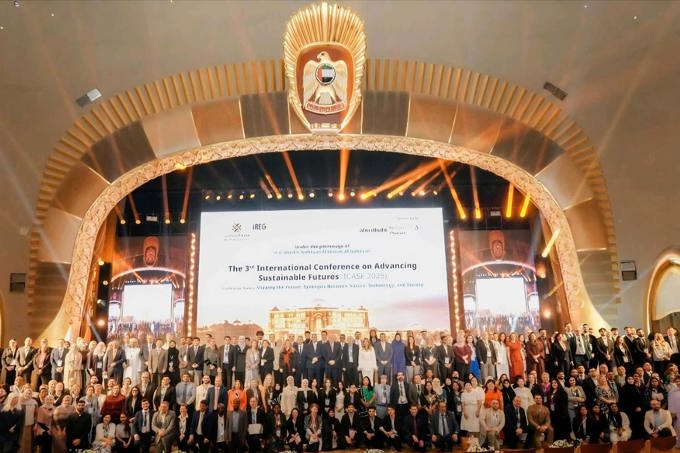
Professor Meis Moukayed, a Professor of Health and Life Sciences at AUD, recently presented her work at the 3rd International Conference on Advancing Sustainable Futures (ICASF 2025). Her research directly addresses two of the UAE’s most pressing priorities: health and food/water security. This article explores how AUD’s educational framework and research initiatives are actively contributing to these national goals, providing a model for how academic institutions can drive sustainable advancement.
Addressing Critical Health Challenges Through Research
Health research is a cornerstone of the UAE’s long-term development strategy. Professor Moukayed’s work exemplifies how academic research can translate into actionable public health strategies. Her first paper, presented at ICASF 2025, focused on colorectal cancer (CRC), a significant health concern both globally and within the UAE.
A Framework for Colorectal Cancer Prevention
Professor Moukayed’s research, titled “A Framework for Sustainable Colorectal Cancer Prevention and Mitigation,” moves beyond theoretical analysis. It proposes a practical, multi-faceted public health framework designed to reduce the impact of CRC. The framework is built on several key pillars:
- Health Education: Increasing public awareness about risk factors and early detection.
- Public-Private Partnerships: Leveraging the strengths of both sectors to implement widespread screening and awareness programs.
- Targeted Interventions: Developing specific strategies for different societal segments to ensure maximum effectiveness.
This approach aligns with the UAE’s national health strategies and supports multiple United Nations Sustainable Development Goals (SDGs). It demonstrates how research at AUD is designed to have a direct, positive impact on community well-being. The university’s upcoming School of Medicine, in partnership with Penn Medicine, is set to further amplify these efforts, creating a robust ecosystem for health education and innovation.
Ensuring a Sustainable Future: Food and Water Security
Beyond health, resource security is a fundamental challenge for the UAE and the world. Professor Moukayed’s second paper, developed in collaboration with industry experts and AUD alumni from Ehfaaz LLC, tackles this issue head-on. The research, “Strategic Future Foresight on Food and Water Security in the UAE,” provides a comprehensive analysis of the sector’s future.
Building Resilience Through Strategic Initiatives
The paper examines the driving forces behind food and water demand and identifies key opportunities for growth and innovation. It outlines the UAE’s strategic initiatives over the past two decades, which include:
- Advanced technology projects for water desalination and agricultural efficiency.
- Policy reforms that encourage sustainable practices and circular economy models.
- Educational programs designed to cultivate a skilled workforce for these critical sectors.
This research underscores AUD’s commitment to sustainability education that is deeply connected to industry needs and national priorities. By fostering collaborations between faculty, students, and companies like Ehfaaz LLC, AUD ensures that its academic work remains relevant and impactful.
Integrating Sustainability into Academic Programs
Research is only one part of the equation. The educational programs at AUD are structured to prepare students to tackle these same challenges in their future careers. The university’s curriculum across various schools is infused with principles of sustainability and innovation.
Programs Aligned with National Priorities
Students can engage with these topics through a variety of undergraduate and graduate programs:
- Engineering: Programs like Civil Engineering and Mechanical Engineering include specializations and minors in environmental engineering, directly addressing water and infrastructure sustainability.
- Business: The Master of Science in Innovation Management equips students with the skills to develop sustainable business models and circular economy solutions.
- Sciences: The Biology program, with its focus on health and life sciences, provides the foundational knowledge for careers in public health and medical research.
- Architecture & Design: Programs in Urban Design and Architecture focus on creating sustainable built environments for the future.
These programs are complemented by the university’s own sustainability initiatives, creating a holistic learning environment where theory and practice converge.
The Role of University-Led Research in National Development
The work of Professor Moukayed and her colleagues at AUD highlights a critical model for higher education. Universities are not just centers of learning; they are engines of innovation and problem-solving. By conducting research that addresses national priorities in health, food security, and water security, AUD contributes directly to the UAE’s vision for a knowledge-based, sustainable economy.
This commitment is reflected in the university’s strategic plan and its mission to produce graduates who are prepared to advance society. The integration of research findings into the curriculum ensures that students learn from the latest developments and are trained to think critically about complex, interdisciplinary problems.
Preparing the Next Generation of Leaders
For prospective students, the opportunity to learn from faculty engaged in cutting-edge research is a significant advantage. It provides a window into the real-world application of their studies and connects them to a network of professionals and alumni working in key sectors.
AUD’s focus on applied research and industry collaboration, as seen in Professor Moukayed’s work with Ehfaaz LLC, prepares students for the collaborative nature of modern professional environments. Graduates are not only equipped with technical knowledge but also with an understanding of how to apply that knowledge to achieve sustainable outcomes.
Exploring Educational Opportunities
If you are interested in contributing to fields like public health, environmental engineering, or sustainable business, exploring the academic programs at institutions that prioritize research and innovation is a crucial step. Understanding how a university’s mission aligns with your career goals can help you make an informed decision about your education.
Consider the specific programs that match your interests and investigate the research areas of the faculty. This will give you a clearer picture of the learning environment and the potential for impactful work.
Conclusion
The American University in Dubai’s efforts in advancing health and sustainability through research and education provide a clear example of academic leadership. By addressing critical issues like colorectal cancer prevention and food and water security, AUD’s faculty are contributing valuable insights to national and global conversations. For students, this creates an educational experience that is both intellectually rigorous and socially relevant, preparing them to become the innovators and leaders needed to build a more sustainable future.